

Whiskey Rebellion Antiques
Gebruder Weyersberg, Solingen mid-1850's light Calvary saber
Gebruder Weyersberg, Solingen mid-1850's light Calvary saber
This is a mid-to-late 19th-century German military saber by Gebrüder Weyersberg of Solingen (pre-1883 merger), most consistent with a lighter cavalry, artillery, or mounted-troop pattern rather than a heavy cavalry “wrist-breaker.”
Maker stamp: The close-up confirms the ricasso mark as “WEYERSBERG / SOLINGEN” in the stacked capital format used by the firm before its 1883 amalgamation with Kirschbaum (after which marks typically became W.K. & C., Weyersberg Kirschbaum & Co., or WKC). This is a genuine Solingen product from one of the major 19th-century German blade makers that supplied Prussian and other German-state forces as well as export markets.
Dimensions: Blade 28″ (~71 cm) and overall 35″ (~89 cm). These are shorter than typical heavy cavalry sabers of the era (often 34–36″+ blades) and align better with lighter cavalry, artillery officer/NCO, train, or similar mounted-service patterns common in mid-to-late 19th-century German armies.
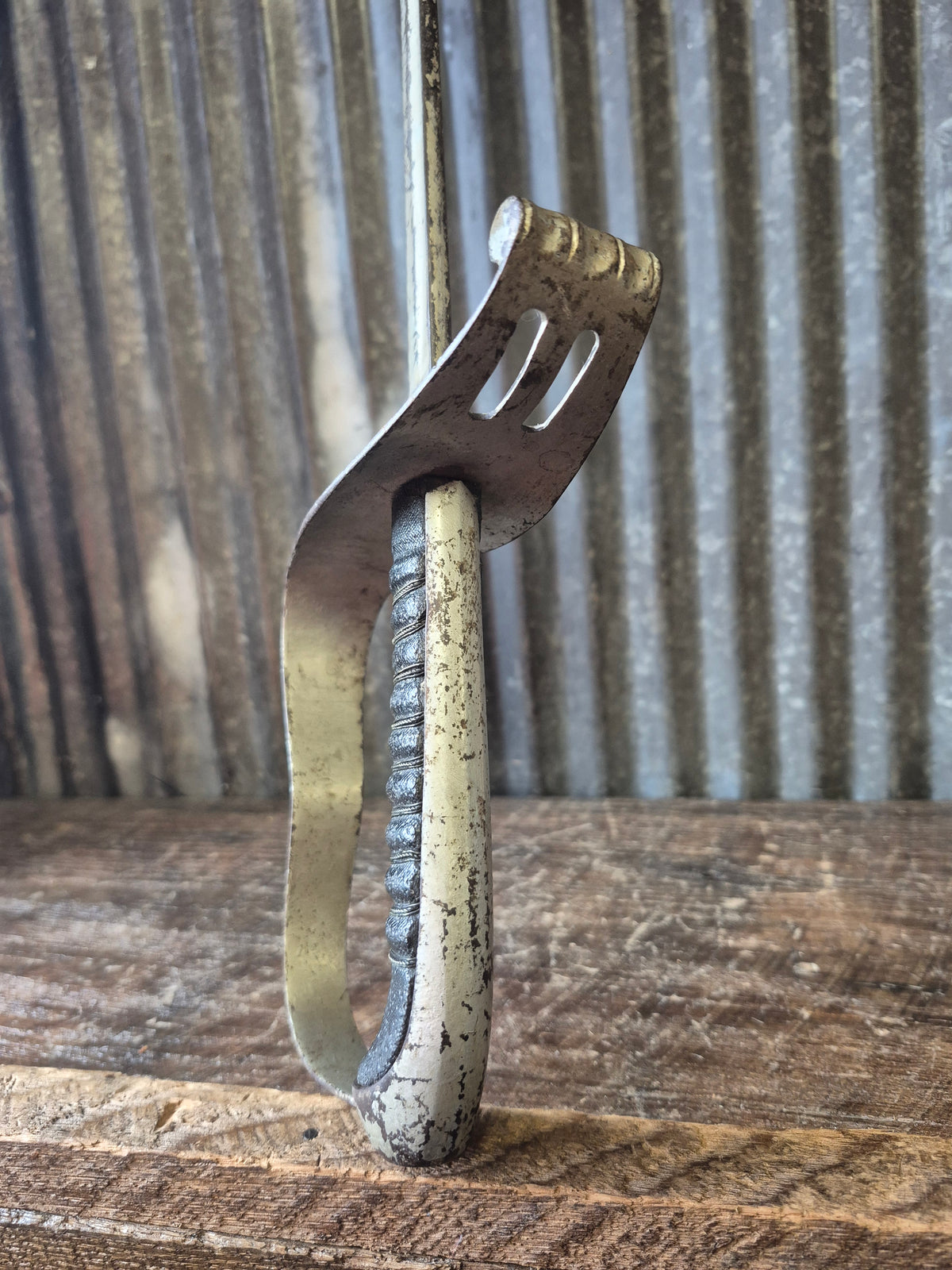
Hilt: Steel D-/stirrup-style knuckle bow with the distinctive vertical slots/piercings near the upper section of the guard, short rear quillon/langets, and black ribbed (grooved) grip with wire wrap. This is a practical military form rather than an ornate dress piece.
Blade: Single-edged with fuller, slight curve, and pointed tip—typical of the period’s service sabers.
Likely type
Weyersberg produced a broad range of regulation and semi-regulation sabers. The combination of the pre-1883 stamp, steel D-guard with those specific piercings, ribbed grip, and the 28″ blade length points to a lighter service saber used by cavalry light troops, artillery, or related mounted units rather than the longer, heavier Blücher-style or M1852/79 heavy cavalry patterns. Exact model designation (e.g., a specific Prussian, Bavarian, or state artillery/cavalry variant) is difficult without visible acceptance marks.
Couldn't load pickup availability